Our Story
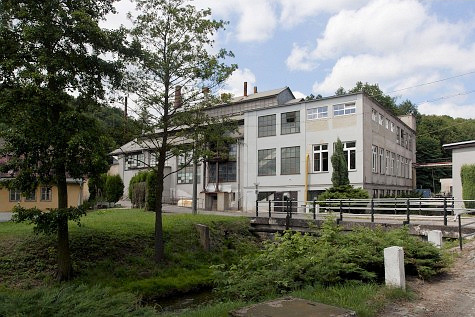
We carry on the tradition of quality glassmaking at the Josefodol glassworks, founded in 1861 by master glass cutter Josef Schreiber in the picturesque valley of the Sázavka river and the Zbožský brook near the town of Světlá nad Sázavou in the Bohemian-Moravian Highlands.
History of the Glassworks
The tradition of glassmaking in Bohemia is very old. Czech glassmaking flourished in the second half of the 17th century, when Bohemian glass began relentlessly pushing Venetian products out of the market. This contest lasted almost two centuries – and it was won by superb Bohemian crystal, decorated by cutting, engraving, carving and painting. Around 1740 there were more than 70 glassworks in Bohemia and many times more cutting and refining workshops.
The Beginnings of Glassmaking around Světlá nad Sázavou
The oldest historically documented glassworks in the Světlá region was the Hogl glassworks, founded sometime between 1700 and 1712 and later known and renowned as Dobrá Voda (Guttenbrunn). It stood in an extensive forest just 4 km from today's CAESAR CRYSTAL BOHEMIAE glassworks in Josefodol. Glassworks were built at the expense of the nobility or of the glassmasters themselves on aristocratic estates, wherever vast forests provided enough wood and where sources of quartz, and possibly limestone, could be found. These glassworks usually had a rather short life, as they used up practically all the wood in their surroundings for fuel and potash, so the glassmakers and their families generally moved on to newly founded glassworks.
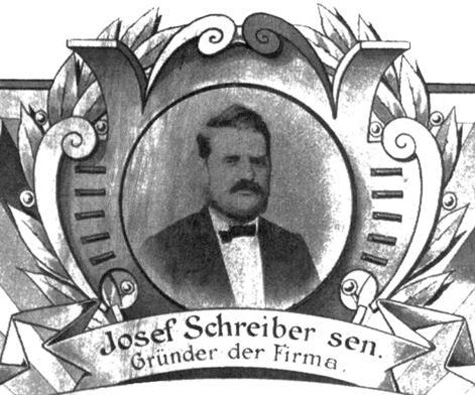
The products of the Loukov glassworks, which stood on the slope of Melechov hill at the site of today's hamlet of Rohule, were of excellent quality. In the 1850s, under glassmaster František Gerhardt, Loukov glass was sold to Vienna to the Schreiber trading house (Josef Schreiber senior, *13 April 1819 Dub nad Moravou, †14 August 1879 Baden).
The Founding of the Josefodol Glassworks
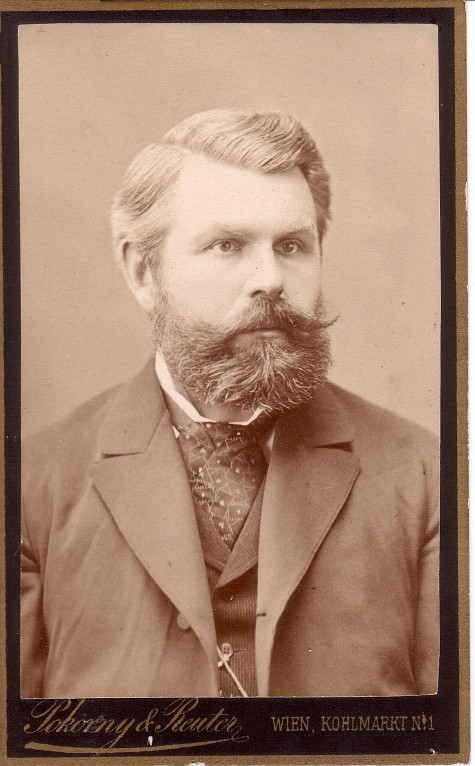
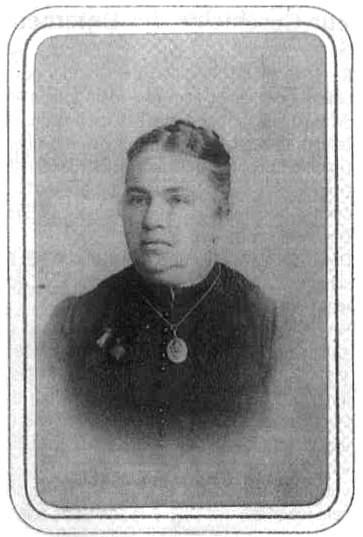
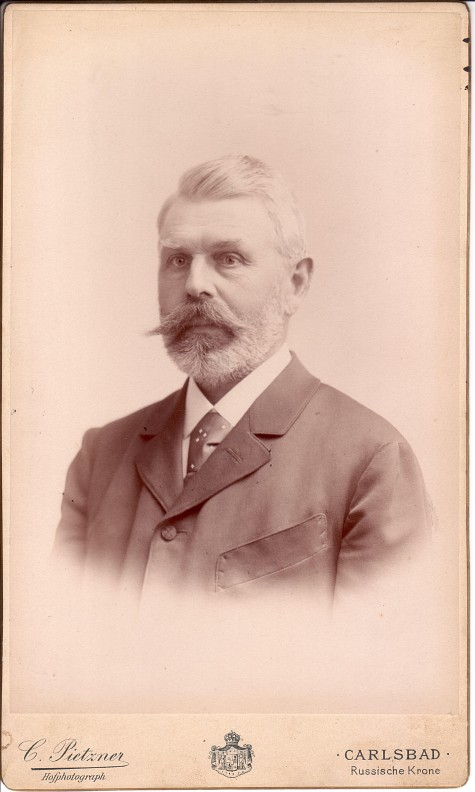
Schreiber's nephew Josef (*8 March 1835 Dub nad Moravou, †17 November 1902 Velké Losiny) often travelled to Bohemia on business to buy glass from various glassworks. On these trips he frequently visited the Světlá region and Rohule to buy glass from Gerhardt. Schreiber grew fond of the local countryside and especially of Gerhardt's pretty daughter Tereza (*10 August 1842 Palčice, †30 December 1932 Rapotín), whom he married. Schreiber then bought a bankrupt paper mill from the nobleman Štencl, converted it into a glass-cutting workshop and started production there in 1861. The glassworks was put into operation in 1882. It was the first glassworks Schreiber founded in Bohemia, and he named it "Josefsthal" – Josefodol. It primarily produced glass intended for cutting, as well as other types such as lighting glass, opal glass and cased glass.
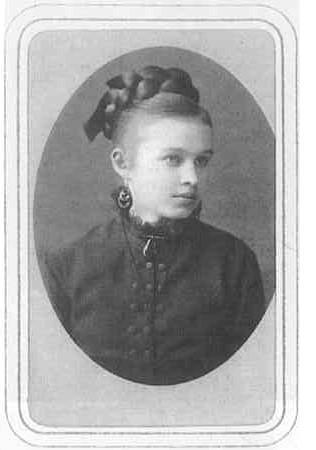
The Schreibers had 7 children. In terms of the ties between glassmaking families, it is worth mentioning their daughter Antonie Schreiber, who married Franz Welz (*13 August 1850, †16 November 1924), whose family owned the oldest glassworks in Dobrá Voda, founded more than 300 years ago. This Franz Welz was also the grandson of Josef Riedel, owner of the glassworks in Polubný (Polaun) in the Desná area of the Jizera Mountains. The history of the Josefodol glassworks is thus directly linked to Riedel Glass Works, the world-famous glassmaker whose group also includes the Nachtmann and Spiegelau brands.
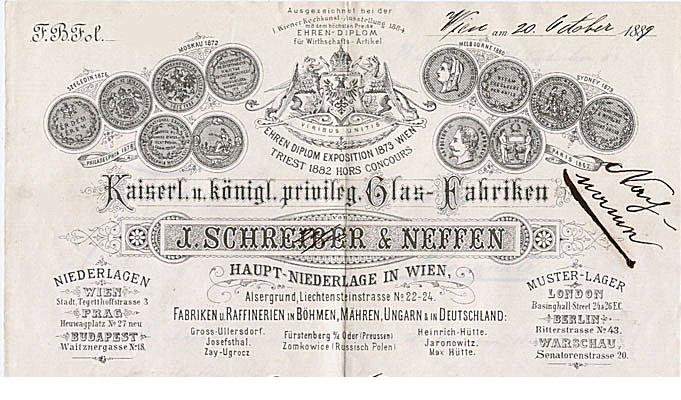
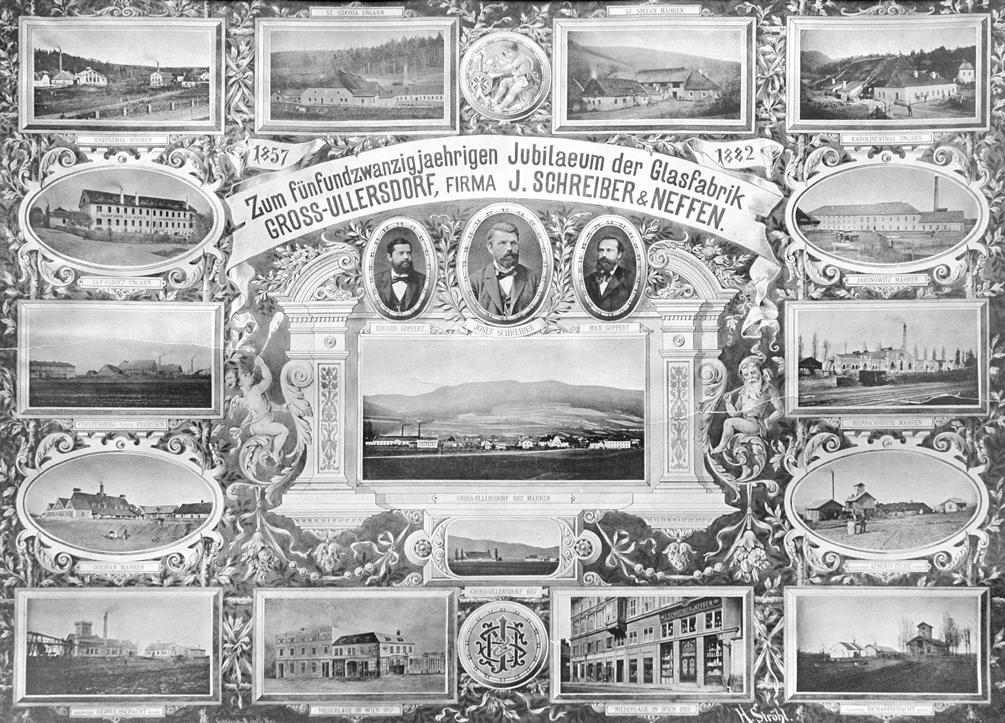
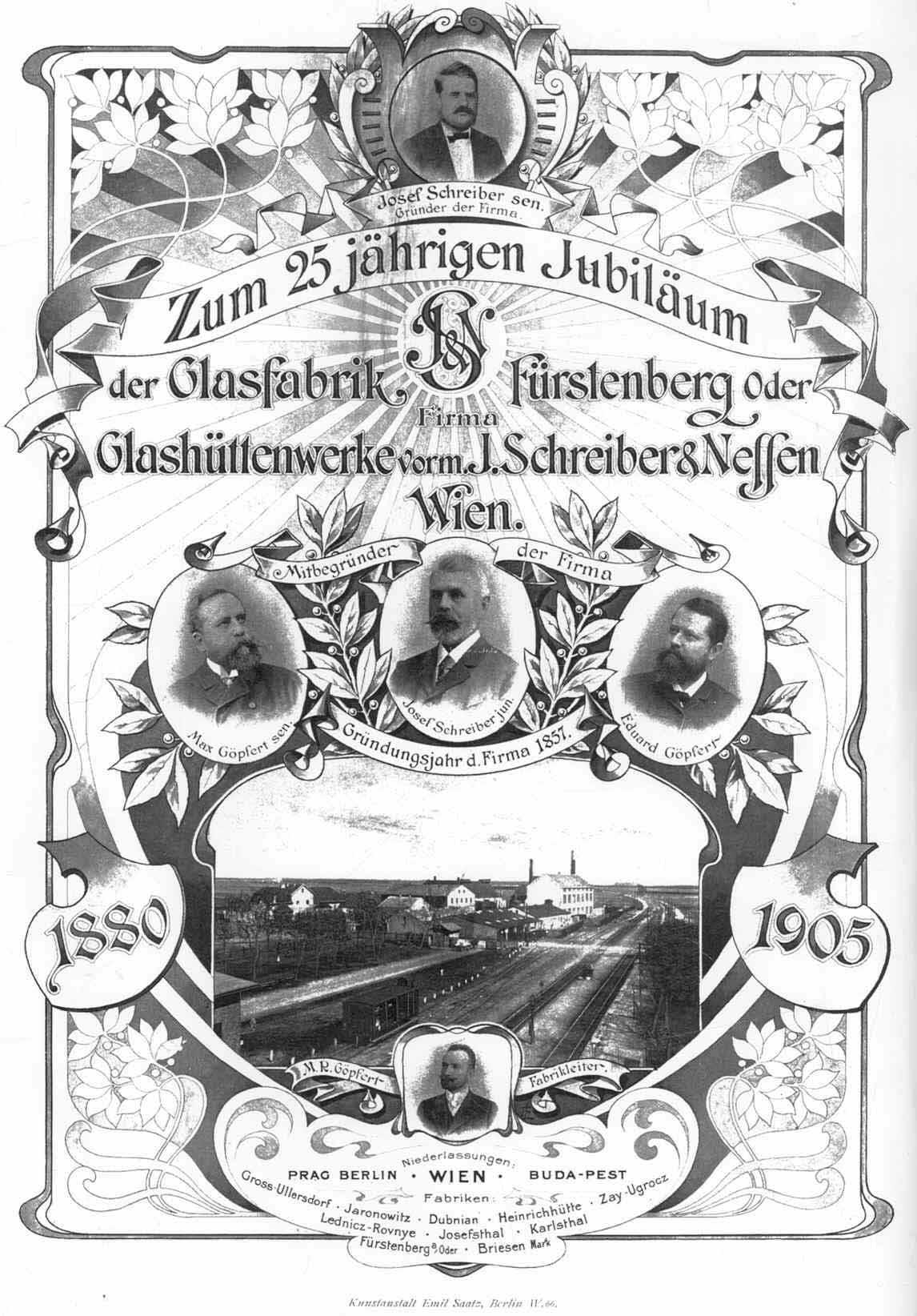
In 1880 Josef Schreiber senior founded the company J. Schreiber & Neffen (J. Schreiber & Nephews), which also included his other glassworks. By 1882 it already employed around 2,000 workers and some 100 office staff. The company catalogue contained around 3,000 product shapes in 15,000 sizes. When Schreiber died, he had a total of 13 glassworks in operation. Wherever he founded a glassworks, he appointed specialists from the Světlá region, whose descendants still live there today.
The Development of the Glassworks at the Turn of the 20th Century
In 1870 he took part in an exhibition in St. Louis, USA, where he saw a new machine, the pantograph. He bought it and had it shipped to Bohemia, where he had another 20 of these machines made, and became the only manufacturer in Europe to produce pantograph-decorated stemware. There he also bought the first spring-operated pressing machine, had several of them made in Rapotín and began producing pressed glass – again as the first in Europe.
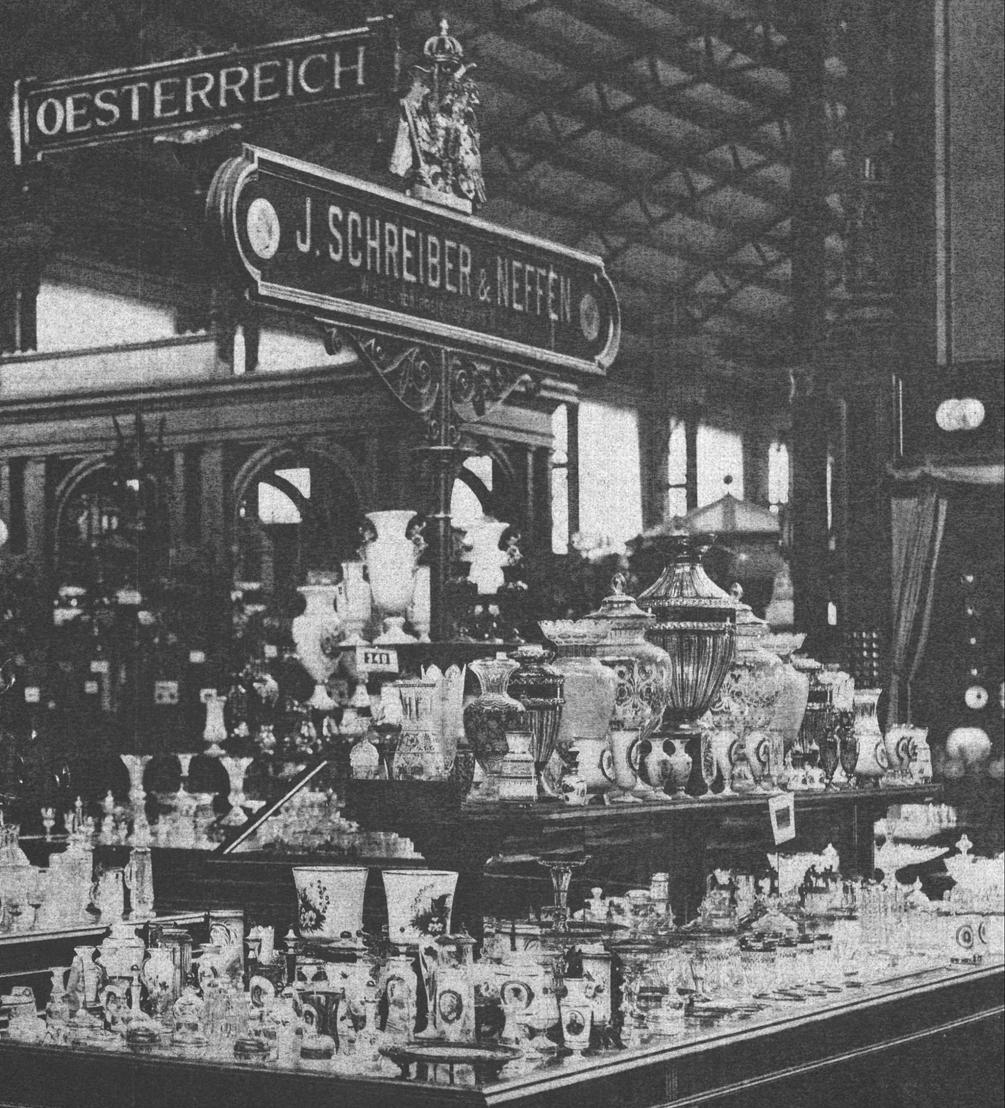
In addition to sales throughout Austria-Hungary, products from Josefodol were exported to America, Great Britain, Germany, the Netherlands, Italy, Romania, Serbia, Russia, Turkey and India.
The glory of J. Schreiber & Neffen was bound up with the fate of Austria-Hungary. After the First World War and the collapse of the Austro-Hungarian monarchy, the company lost its markets and went into decline. After Czechoslovakia declared independence on 28 October 1918, the company Sklářský průmysl Josefodolský (Josefodol Glass Industry) was established.
Among the world-renowned personalities who worked at the Josefodol glassworks, we must not forget Ing. Karel Bačík, better known worldwide as Charles Bacik (https://en.wikipedia.org/wiki/Charles_Bacik), the founder of Waterford Crystal. Before the Second World War, Charles Bacik worked at the Josefodol glassworks as the company's director. On 15 December 1937 Sklářský průmysl Josefodolský ceased to exist and went into liquidation. The company was then bought by the brothers Čeněk and František Císař from Pavlov. The Josefodol plant subsequently included Františkodol, Tasice and Pavlov. Karlov was bought in liquidation by Ing. Karel Bačík (Charles Bacik). A new company was founded: Sklárny a brusírny bratří Císařové, Josefodol (Císař Brothers Glassworks and Cutting Shops, Josefodol). After the Second World War, the glassworks were confiscated from both the Císař brothers and Karel Bačík.
Karel Bačík left for Ireland, where – drawing on his experience from Josefodol and other glassworks in the Světlá region, and with the help of his Czech glass designer Miroslav Havel, who had worked for him in Světlá nad Sázavou – he founded Waterford Crystal. Waterford's world-famous Lismore pattern was designed by none other than Miroslav Havel.
After the glassworks was nationalised in favour of the state enterprise Bohemia and subsequently privatised in 1994, it was renamed CAESAR CRYSTAL after its last private owners, the Císař (Caesar) brothers, whose legacy the current owners proudly uphold.
The Present Day
Under the totalitarian regime the glassworks was nationalised in favour of the state enterprise Bohemia, and following privatisation in 1994 it was renamed CAESAR CRYSTAL BOHEMIAE, a.s., after its last private owners, the Císař (Caesar) brothers, whose legacy the current owners proudly uphold.
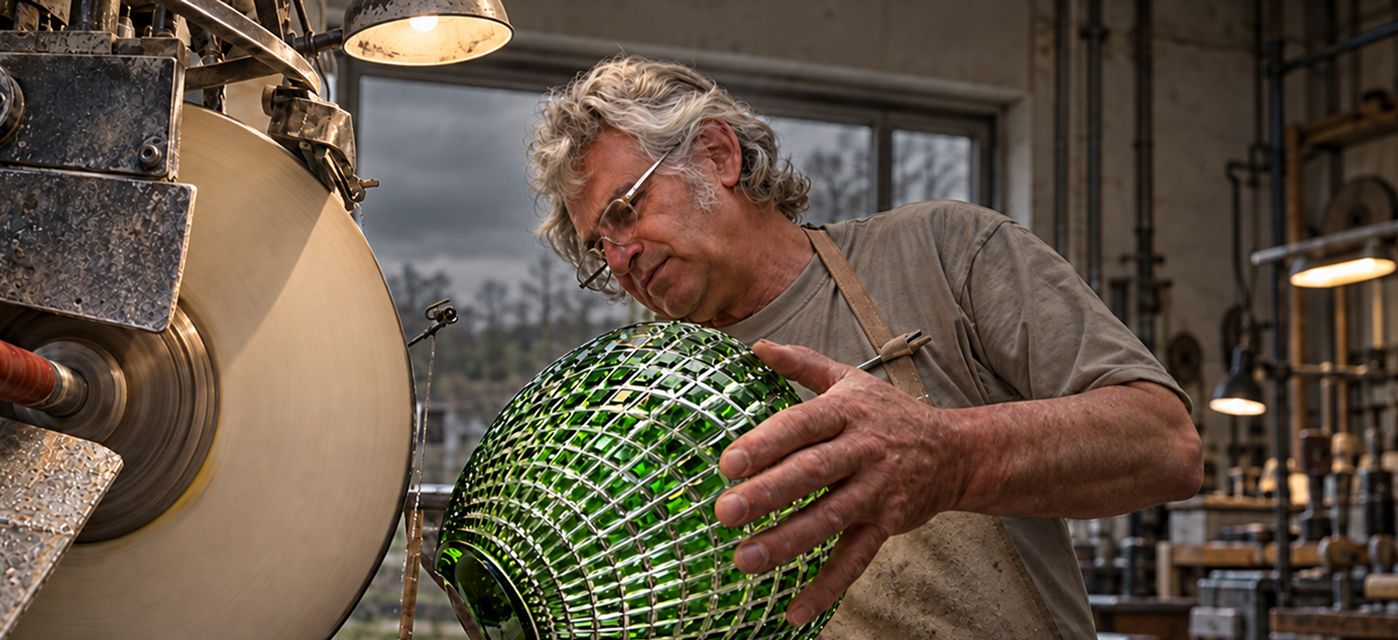
The Josefodol glassworks produces hand-blown and hand-cut 24% lead crystal. By combining time-honoured traditions with distinctly modern patterns by renowned designers – both in-house (above all Zdeněk Kunst and Stanislav Machek) and external (e.g. Švarc, Exnar, Janák) – it creates exceptionally refined crystal beauty that is typical of the very place where it is made.
Cased glass – a clear crystal base of the product which, during hot working, is coated with a thin layer of coloured crystal. During finishing – cutting – this coloured layer is cut through with diamond wheels, creating the unique effect of a cut pattern in which colour, crystal and light contrast with one another.