
Production
CAESAR CRYSTAL BOHEMIAE, a.s. specialises in the production of coloured cased crystal with 24% PbO content, created by fusing a layer of clear crystal with a layer of coloured crystal at temperatures of around 800 °C. This production process represents the very peak of what can be achieved by hand, and only the best and most skilled glassmakers are able to master it. The difficulty of the process is also shown by the fact that no method enabling machine production has yet been invented.
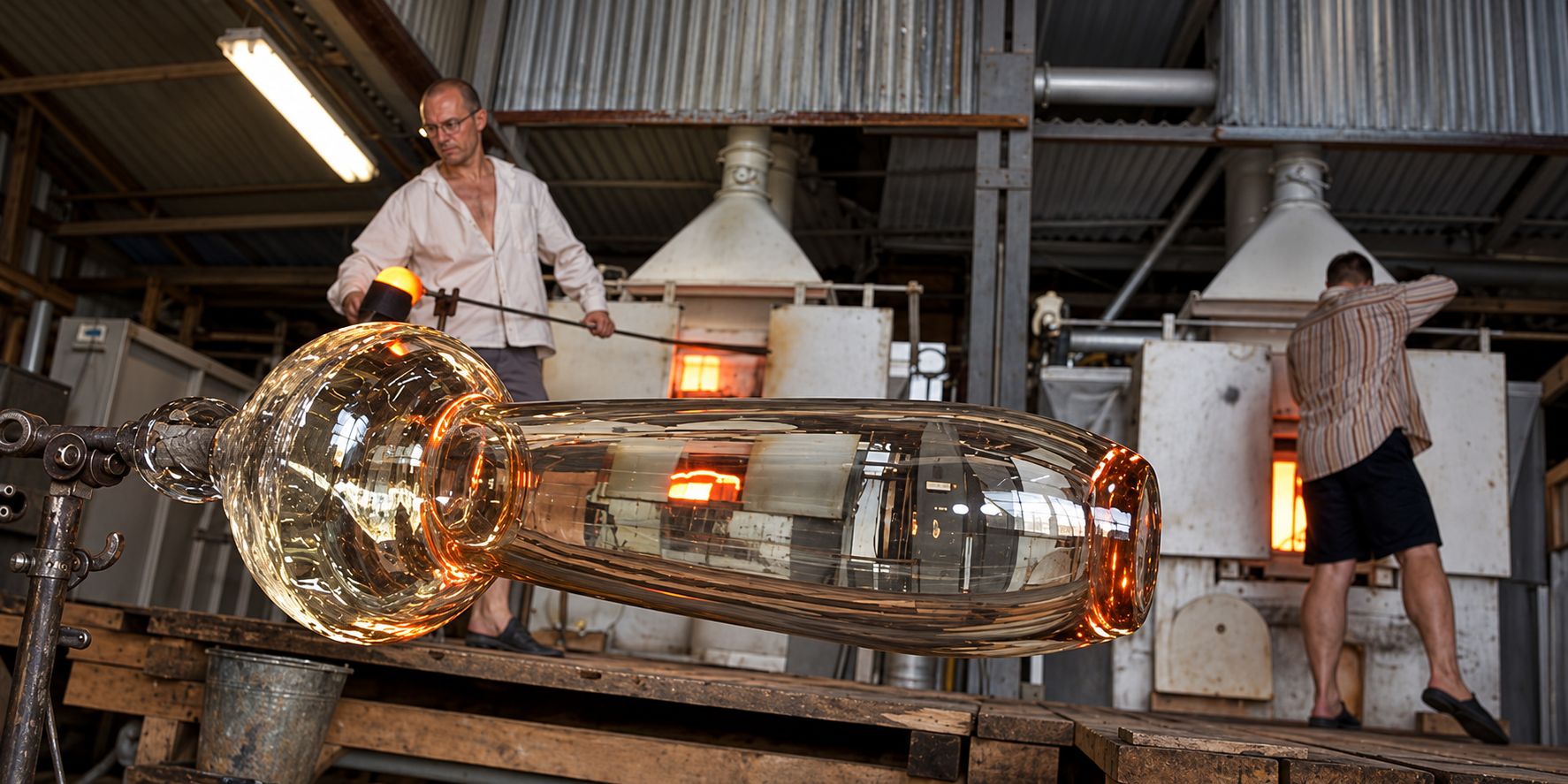
The Production Process
At the CAESAR CRYSTAL BOHEMIAE glassworks, this traditional craft has been preserved to this day. The younger generation of glassmakers learns the skills of working glass from the older masters.
The basic raw materials used in glass melting are glass sand, potash and limestone. Cullet is also added to the glass batch. The typical Caesar colours are melted with an admixture of metal oxides. The current colour palette includes ruby, blue, violet, green, azure and more. Very occasionally black is melted as well, but it is only suitable for certain shapes and patterns.
Each of our products must successfully pass several stages of quality control, which follow every individual step of the process. Only then does the product bear the CAESAR CRYSTAL BOHEMIAE brand. Products showing any imperfections, often invisible to the untrained eye, are broken up and reused in melting new glass.
Step 1
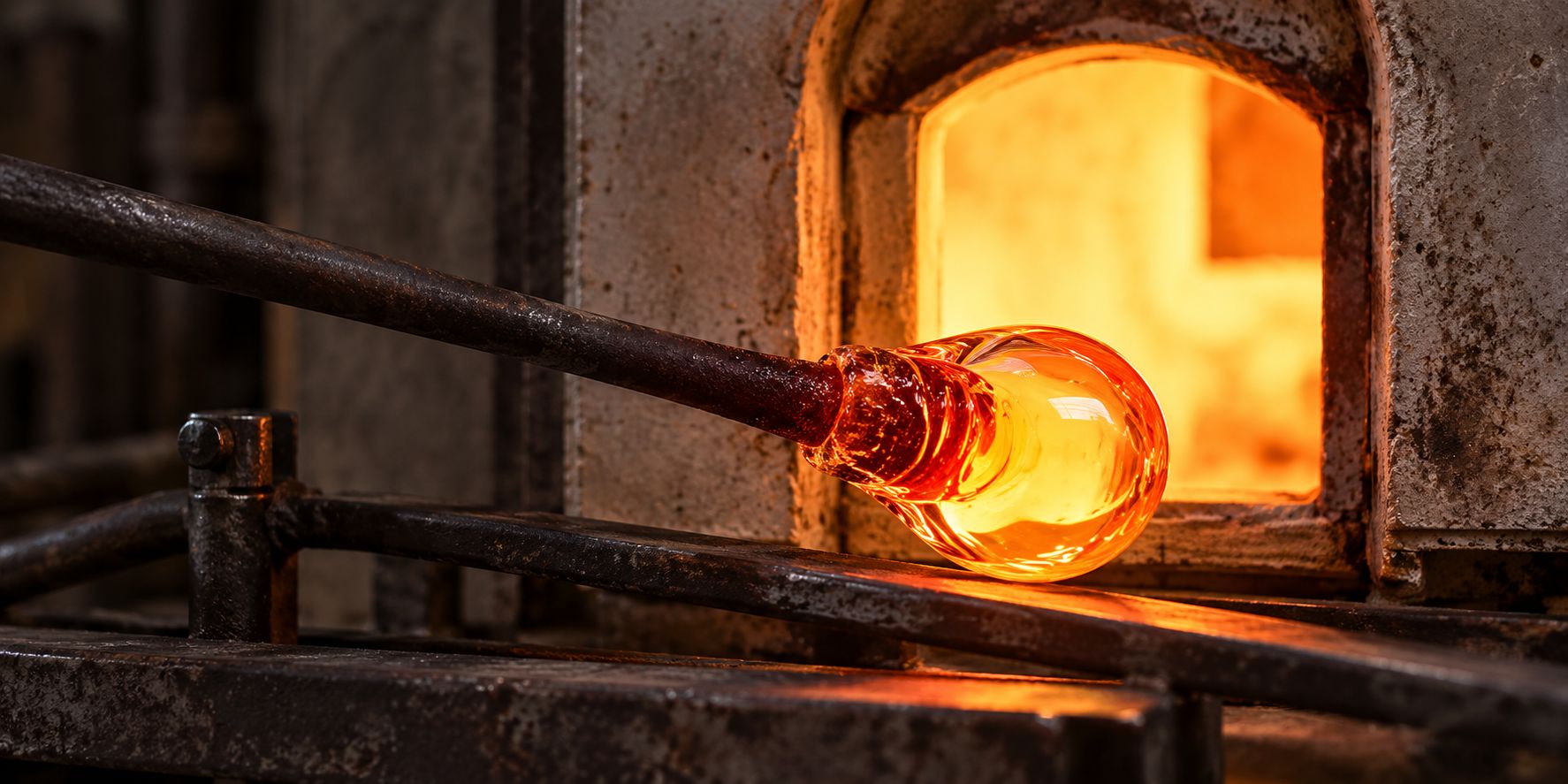
The journey to a glass product begins with melting the raw materials into a glowing mass, which only takes its final shape thanks to human hands – those of the glassmakers, who gather part of the mass on a blowpipe and gradually shapes and blows it into its initial form.
Step 2
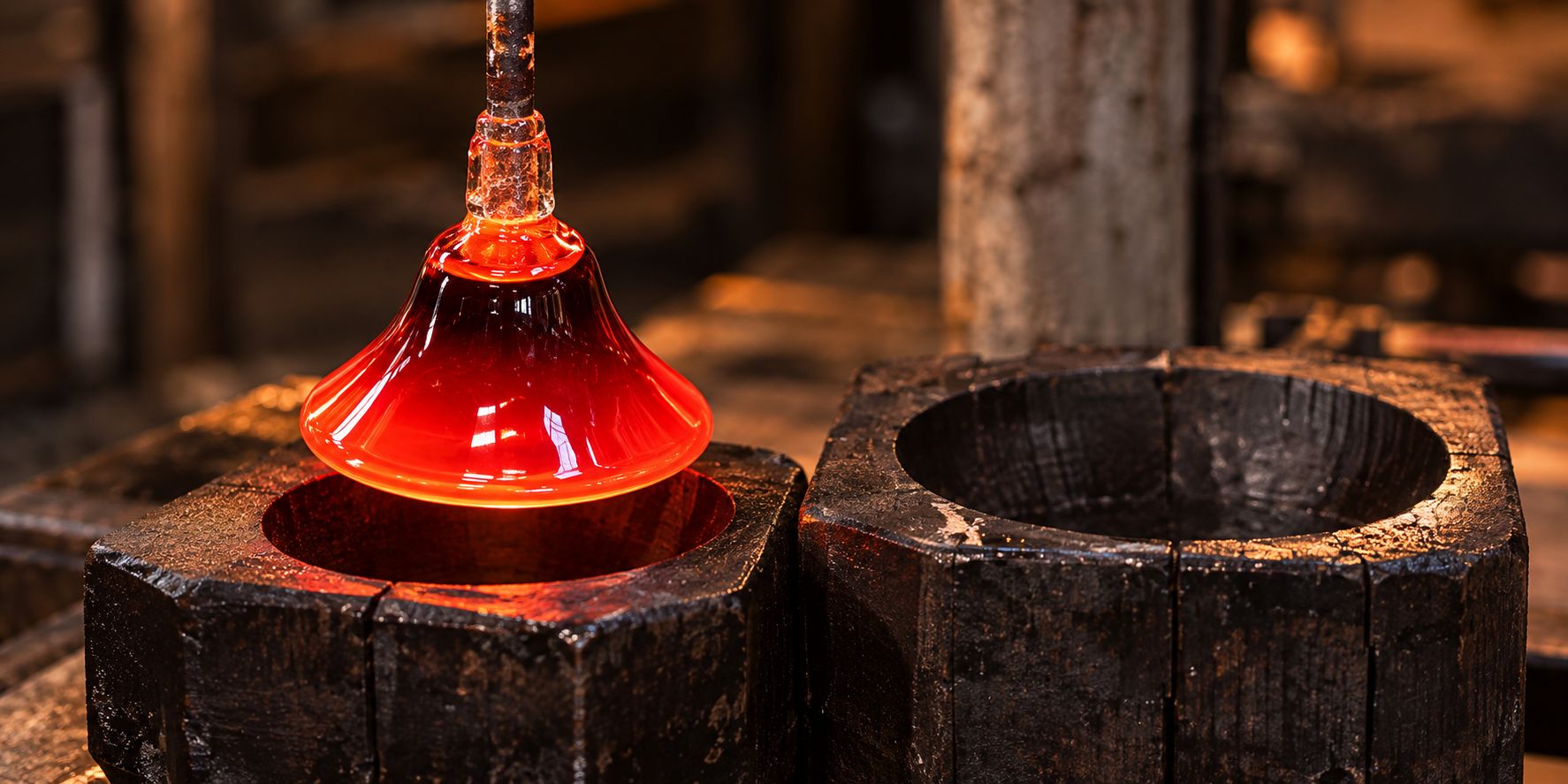
Preparing the clear crystal component before the casing process itself.
Step 3
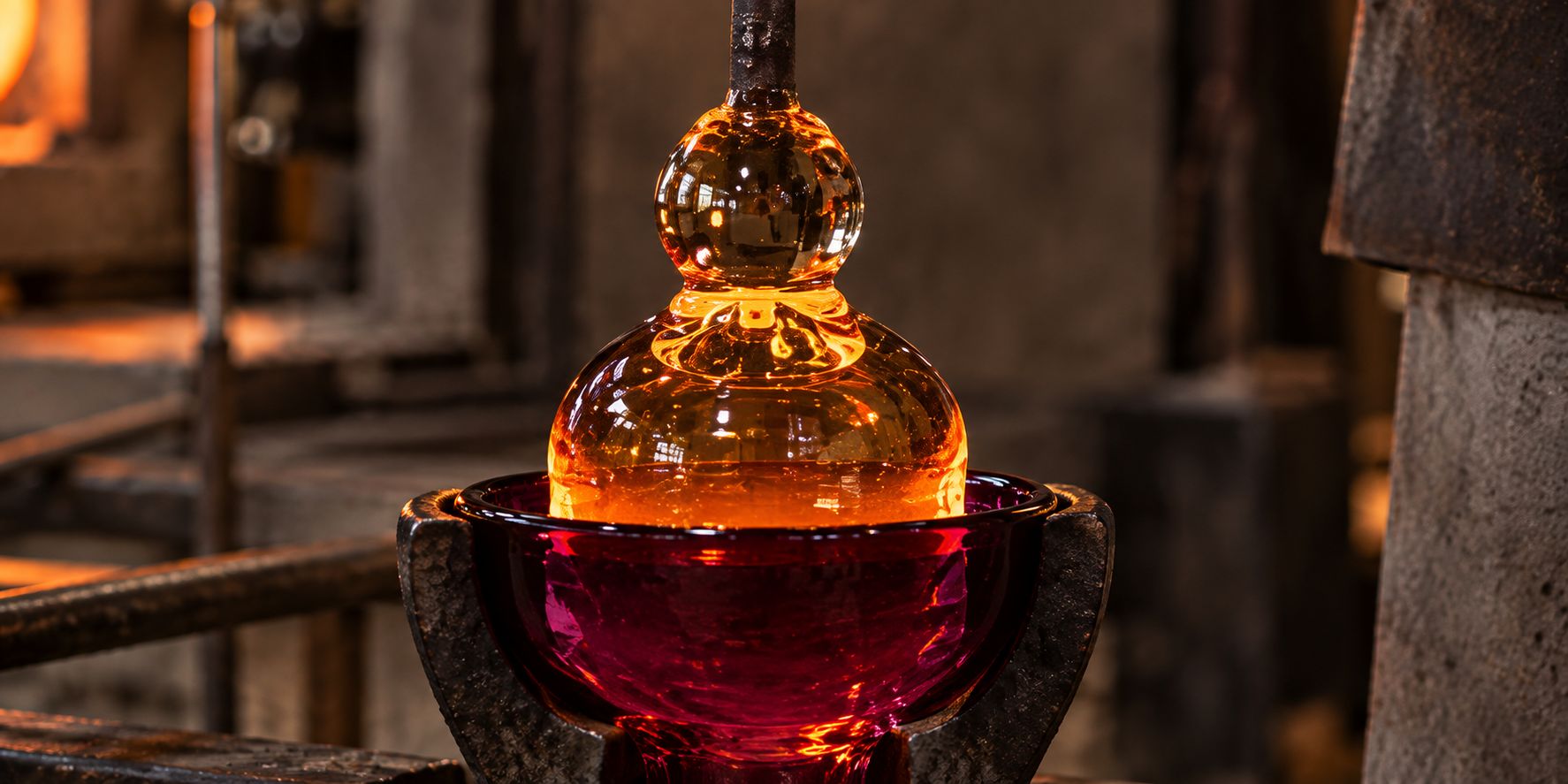
The casing process – at a temperature of around 800 °C, a bulb of clear crystal forming the base of the product is inserted into a pre-shaped coloured funnel. At this point they connect together due to the high temperature.
Step 4
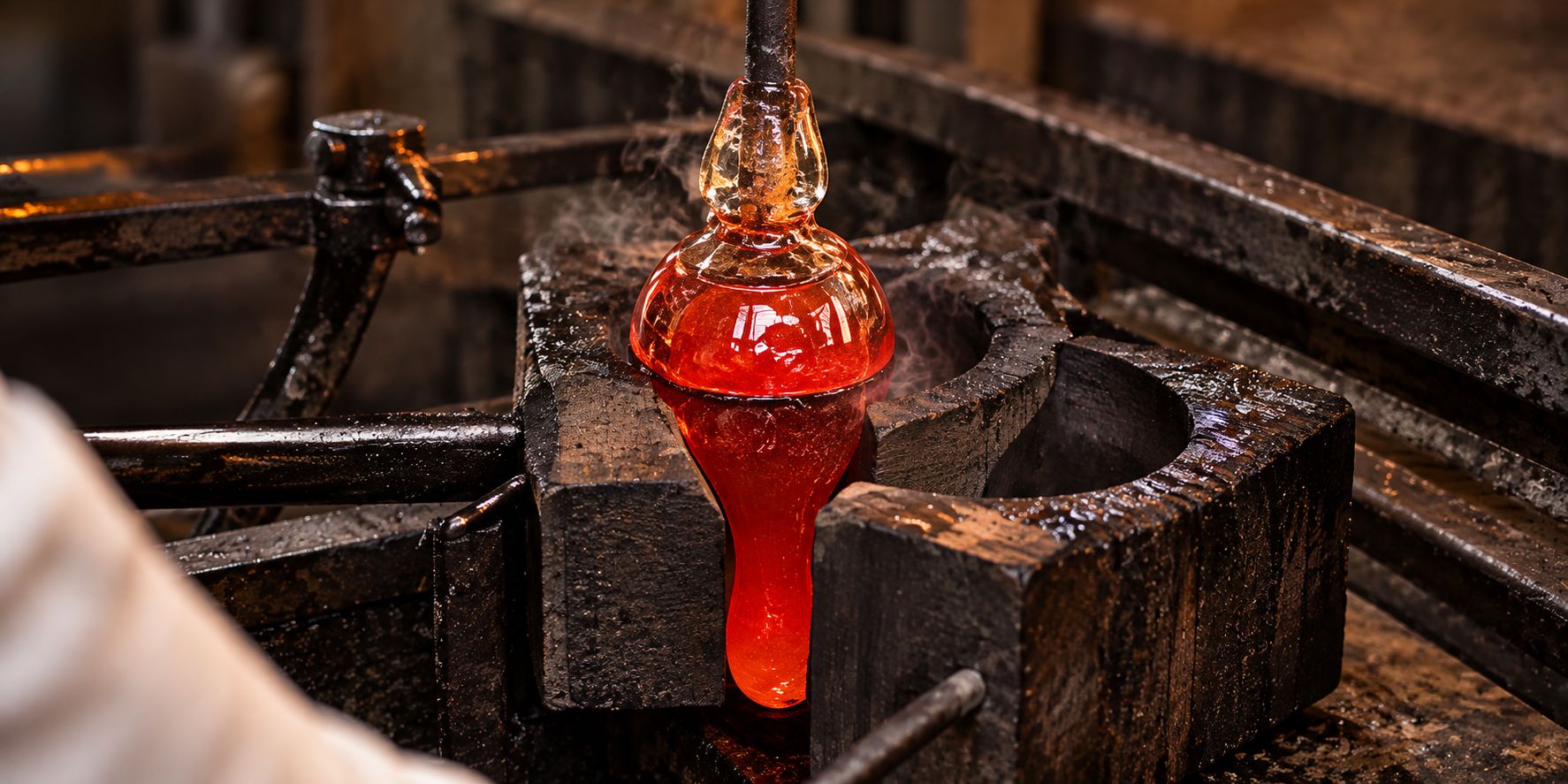
The process continues with shaping in a wet wooden mould, into which the glassmaker places the bulb, which is then blown into its basic shape. The wooden moulds are replaced regularly, as they are in constant contact with the hot glass.
Step 5
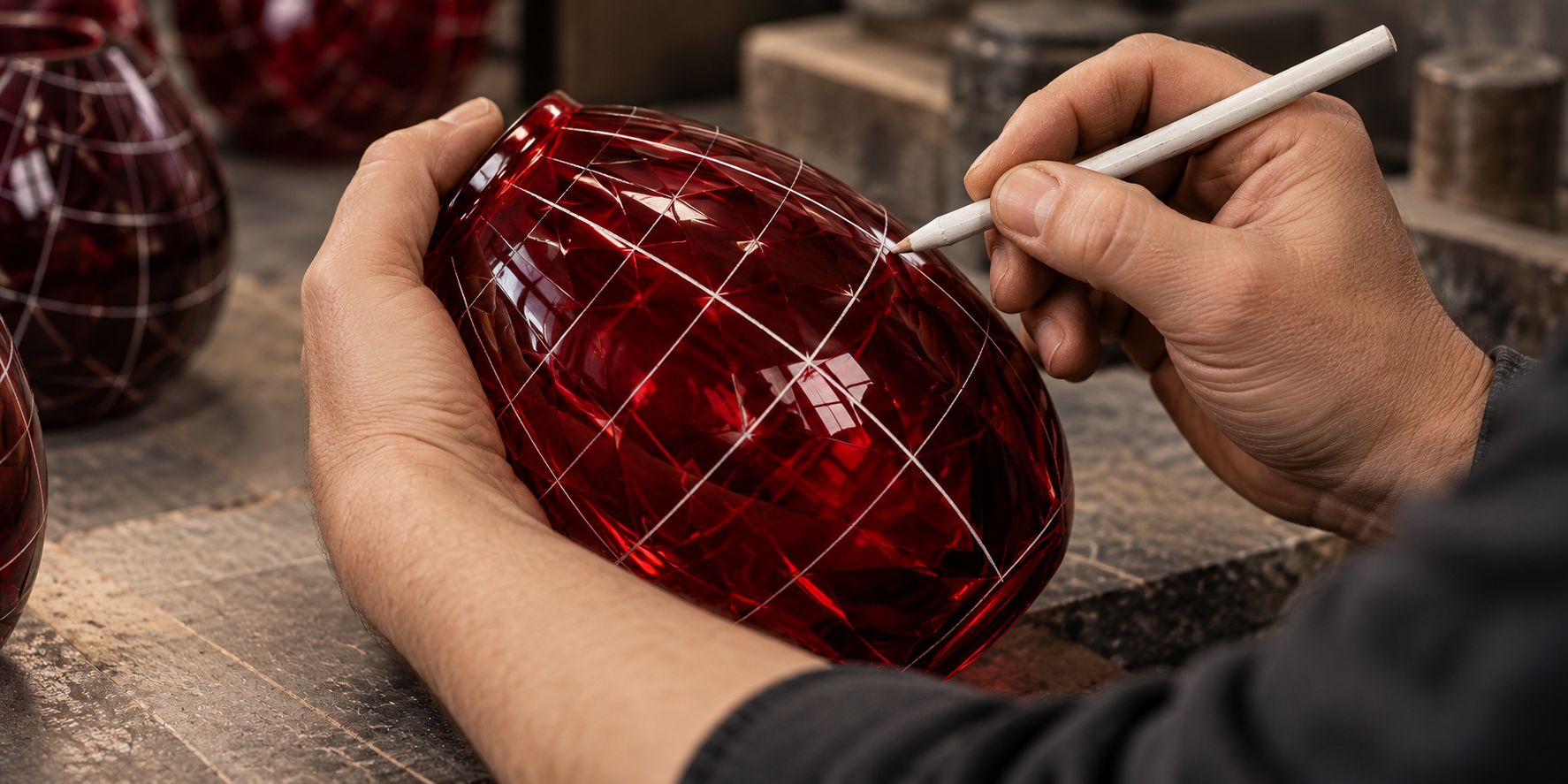
Guiding lines marking the key points of the pattern are drawn on the basic shape to make the cutter’s work easier.
Step 6
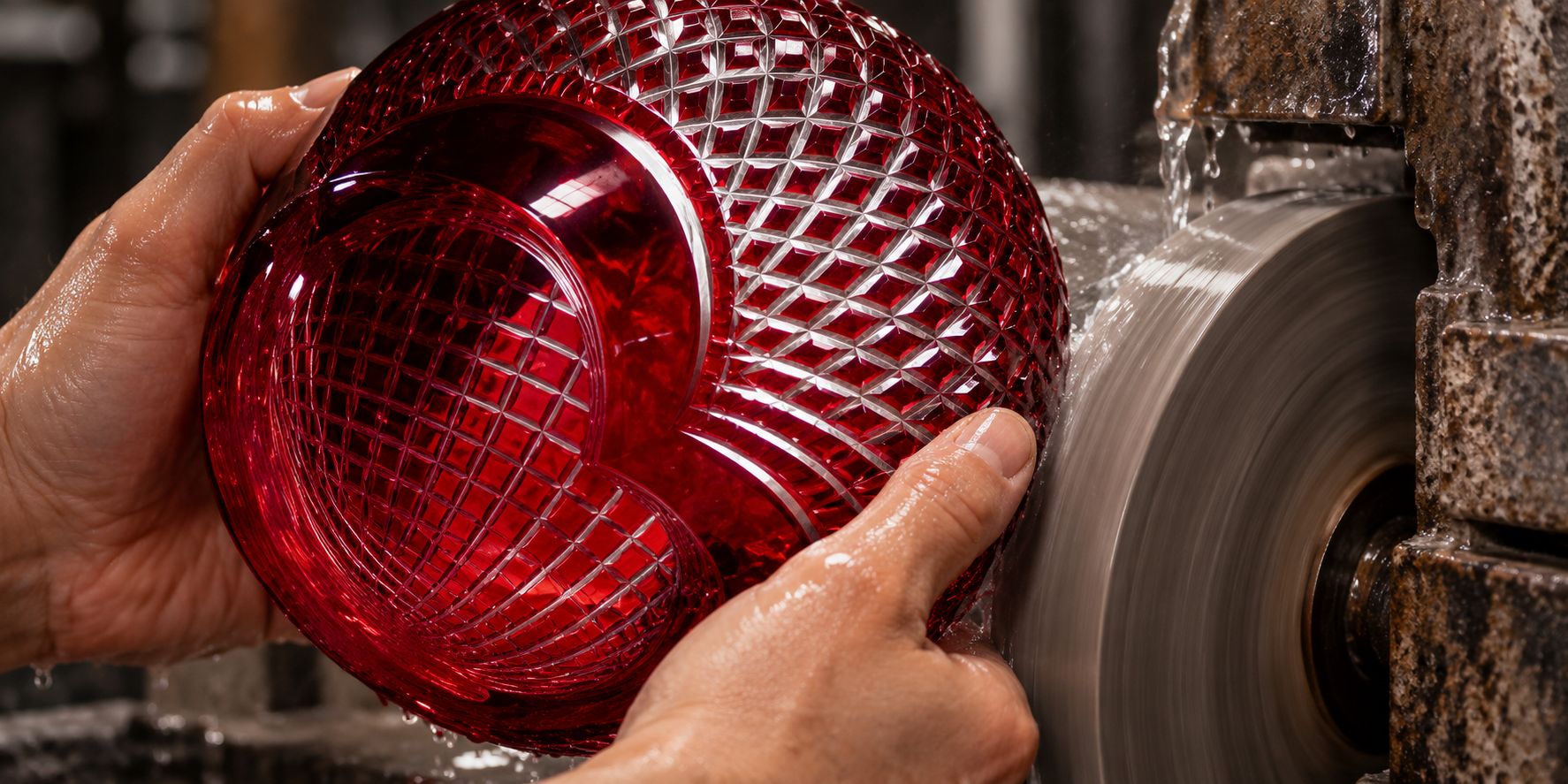
By cutting the glass to various depths with a natural or synthetic wheel, the cutter achieves the desired shape and design of each product.
Step 7
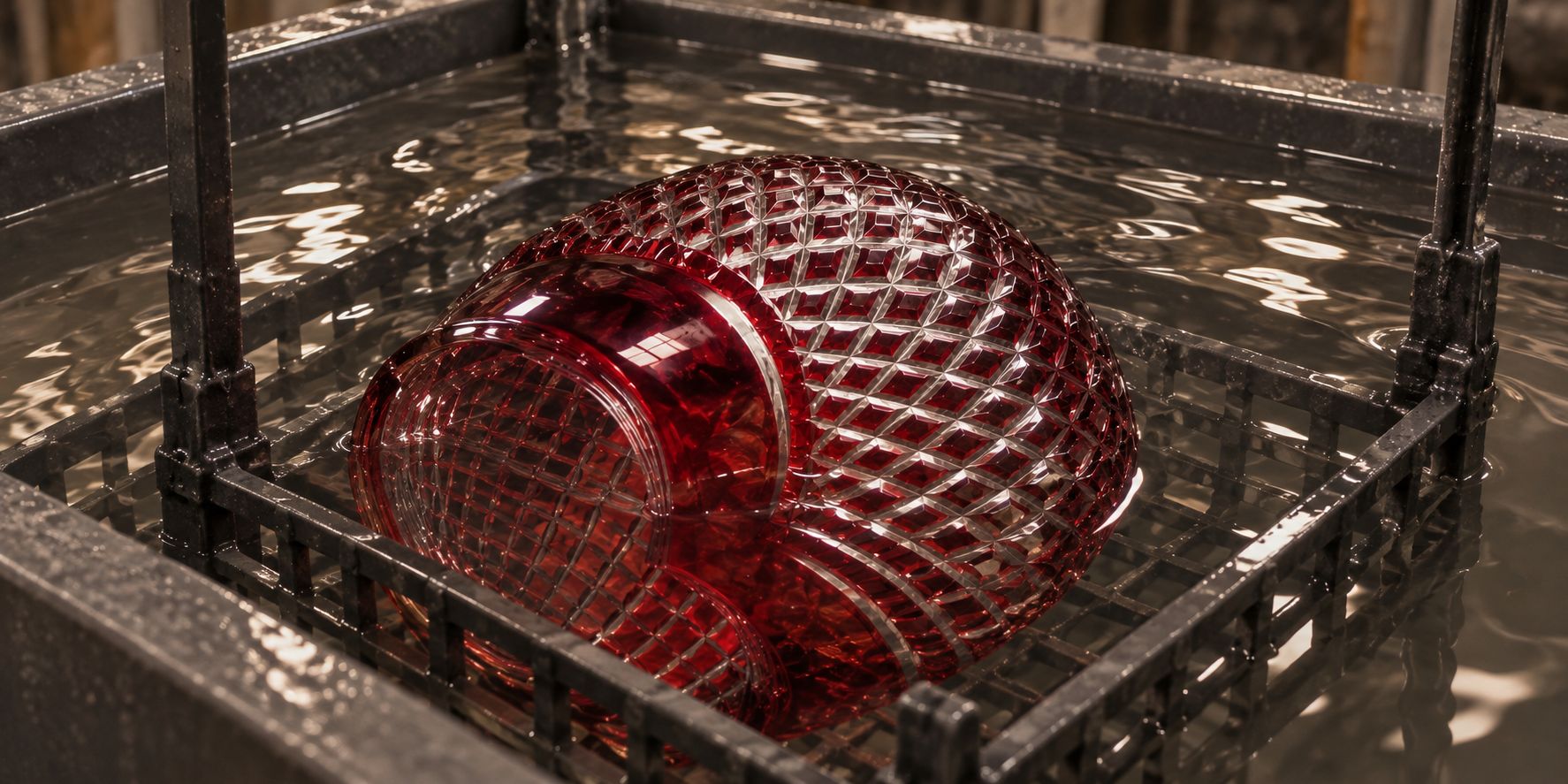
The finishing touch to the entire production process is polishing, during which each product is fully immersed in a polishing bath. The product thus gains a lustre that further enhances its beauty and splendour. A product receives the CAESAR CRYSTAL BOHEMIAE mark only once it has successfully passed the quality-control stages that take place throughout all production processes.